Caregiver (Kaigo) Visa in Japan: Clinical Standards, Terminology & Practical Training
Understanding the operational expectations, specialized Japanese vocabulary, and compassionate patient care standards required in modern Japanese nursing care facilities.
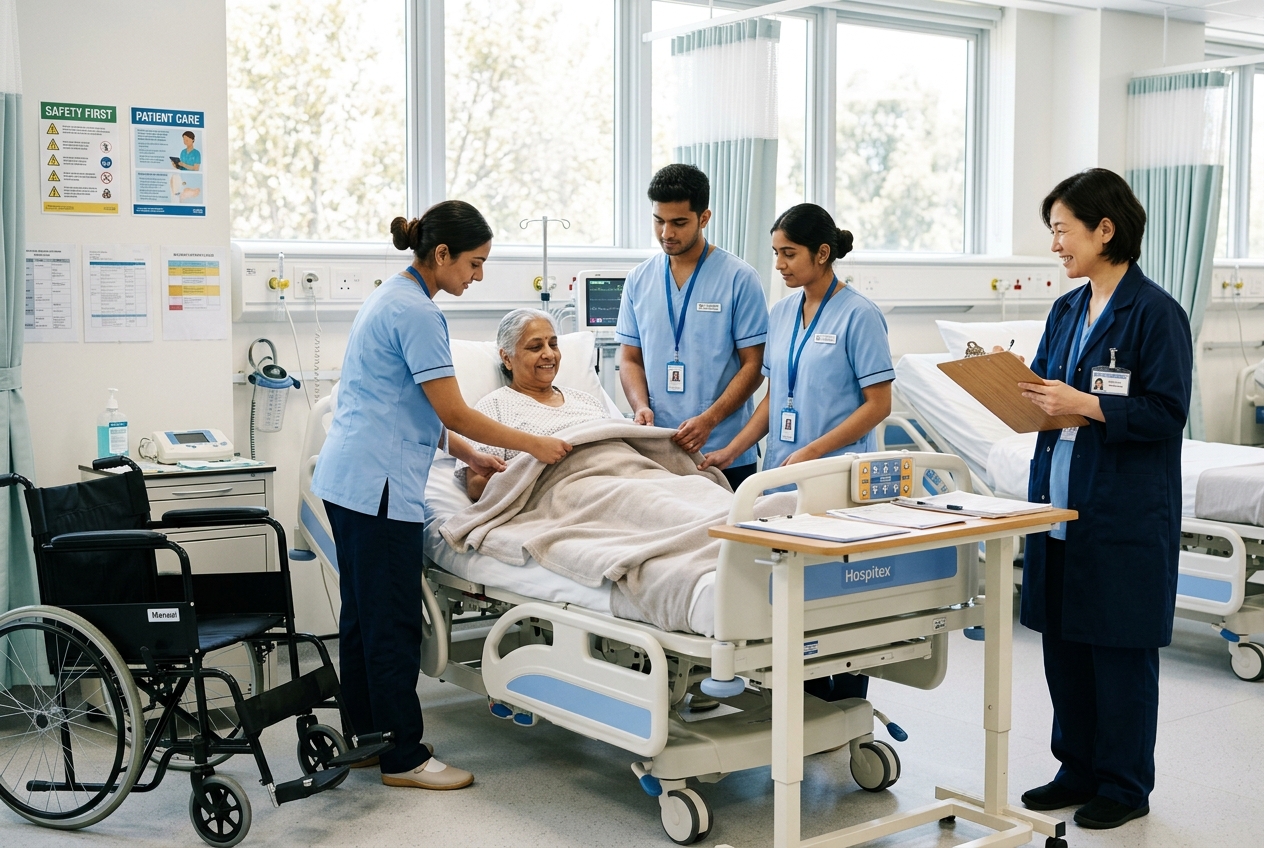
Japan's healthcare and elderly care sector (介護 - Kaigo) represents one of the most respected and stable career paths for overseas professionals. Japanese care homes prioritize human dignity, autonomy, and gentle communication. Understanding standard clinical protocols and healthcare-specific Japanese before arriving is critical for a smooth transition.
1. Key Competencies Required in Japanese Care Facilities
Caregiving in Japan is fundamentally about supporting each resident's independent daily living. Core duties include:
- Mobility & Transfer Support (移乗介助): Safe wheelchair transfer, bed repositioning, and walking assistance using ergonomic techniques that protect both resident and caregiver.
- Nutritional & Meal Assistance (食事介助): Understanding dietary textures, swallowing safety precautions, and post-meal oral hygiene.
- Personal Hygiene & Bathing (入浴・排泄介助): Providing respectful privacy, maintaining skin integrity, and adhering to strict infection prevention protocols.
- Care Recording & Reporting (記録・申し送り): Accurately noting vital signs, hydration, appetite, and emotional state using standardized Japanese medical terminology.
2. The Nursing Care Japanese Evaluation Test
In addition to the standard JFT-Basic or JLPT N4 exam, prospective caregivers take the specialized Nursing Care Japanese Evaluation Test. This Prometric exam assesses comprehension of terms such as condition, vital signs, shift handover, and compassionate honorific speech used with elderly residents.
3. Practical Simulation at Friendly Japanese Academy
Our Gongabu center features an authentic caregiving simulation room equipped with adjustable nursing beds, patient transfer equipment, standard Japanese wheelchairs, and training mannequins. Under the supervision of experienced instructors, students gain muscle memory and interpersonal confidence long before entering a Japanese eldercare institution.